
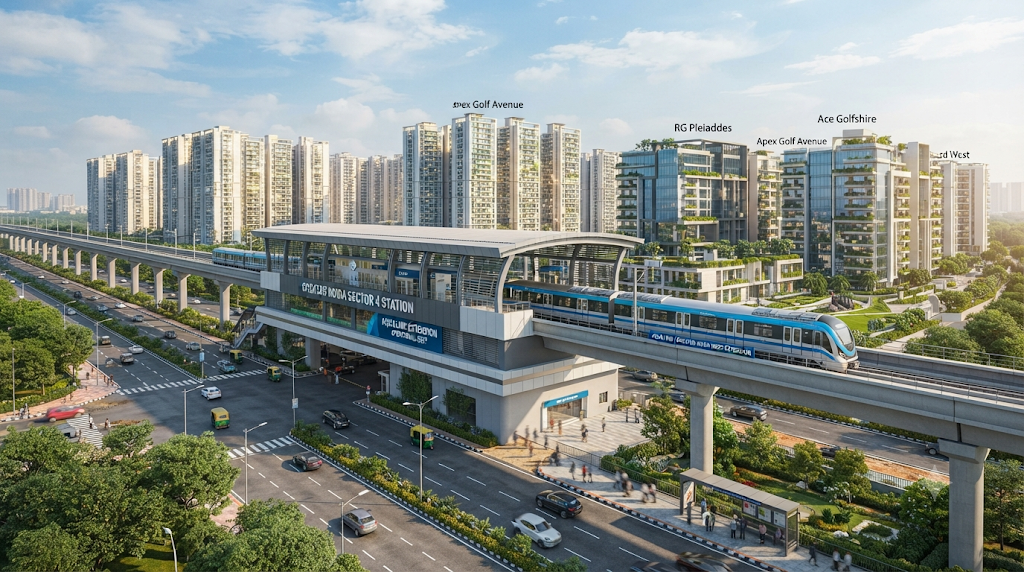
Why Is Metro Connectivity Becoming Important for Greater Noida West in 2027?
Greater Noida West has become one of the popular residential destinations in the Delhi-NCR region. Over the years, the area has attracted homebuyers, working professionals and real estate investors because of its residential societies, educational institutions, healthcare facilities and comparatively affordable housing options.
However, transportation has remained a major concern for many residents. People travelling to Noida, Delhi, Ghaziabad and nearby business districts often depend on personal vehicles, buses, auto-rickshaws and cabs. During office hours, heavy traffic can turn even a short journey into a tiring experience.
Better public transportation is therefore an important requirement for the area’s continued development.
This is where the latest Greater Noida West metro connectivity updates become relevant. The proposed expansion of the Noida Metro Aqua Line is expected to improve transportation facilities and connect more residential areas with the existing metro network.
For homebuyers exploring projects such as RG Pleiaddes, improved regional connectivity is also an important factor to consider when evaluating the area’s long-term residential appeal.
The upcoming infrastructure developments could make daily commuting easier, encourage more people to consider Greater Noida West and create additional interest in its residential property market.
Let’s explore the latest metro developments, proposed routes and their possible impact on real estate.
What Are the Latest Greater Noida West Metro Connectivity Updates for 2027?
One of the biggest developments for the region is the approved Aqua Line extension connecting Noida Sector 51 with Greater Noida Sector 4.
The Union Cabinet approved this project on November 11, 2026. The proposed corridor will cover approximately 8.449 kilometres and include five elevated metro stations.
The estimated project cost is ₹2,390 crore, and the implementation period is expected to be around four years.
The five proposed stations are:
- Sector 61, Noida
- Sector 70, Noida
- Sector 122, Noida
- Sector 123, Noida
- Greater Noida Sector 4
The proposed Sector 61 station will provide an interchange with the Delhi Metro Blue Line. This connection is particularly important because it can make travelling between Noida, Delhi and other parts of NCR more convenient.
Construction is expected to begin in 2027, with completion targeted around 2031.
These Greater Noida West metro connectivity updates represent an important step towards improving public transportation in the region. However, residents should understand that approval and operational services are two different things. Actual commuting benefits will become available only after construction, testing and commissioning are completed.
For people considering residential investments in Greater Noida West, the progress of this project will be worth monitoring throughout 2027.
How Will the Greater Noida West Metro Extension Improve Daily Commuting?
Daily commuting is one of the biggest challenges for people living in Greater Noida West. Many residents travel to offices, educational institutions, hospitals and commercial centres in different parts of NCR.
Depending entirely on road transportation can make these journeys expensive and time-consuming.
The proposed Greater Noida West metro extension aims to provide residents with another convenient transportation option.
Better Connectivity With Delhi Metro
The proposed interchange at Sector 61 will connect the Aqua Line with the Blue Line.
This could make travelling towards important destinations in Delhi and Noida easier. Office employees, students and other regular commuters may benefit from better access to the wider metro network.
Instead of depending on multiple road-based transport options, passengers will have an additional public transportation route.
Reduced Dependence on Private Vehicles
Cars and two-wheelers provide flexibility, but regular commuting also brings fuel expenses, parking charges and traffic-related stress.
A well-connected metro network could encourage more residents to use public transportation for their everyday journeys.
This may also help reduce the number of private vehicles on busy roads over time.
Improved Access to Commercial Areas
Better metro connectivity can make commercial locations, shopping centres, healthcare facilities and educational institutions easier to access.
This is particularly useful for working professionals who prefer living in residential areas while travelling to business districts for work.
As transportation improves, Greater Noida West could become more practical for people looking for homes in the region.
Which Residential Areas Could Benefit From the Upcoming Greater Noida West Metro Route?
Metro stations often influence residential demand because people prefer locations with convenient access to public transportation.
However, the benefits are not necessarily the same for every sector. Actual convenience depends on the distance between a residential property and the station, road conditions and available last-mile transportation.
The proposed Greater Noida West metro route includes several locations that could benefit from improved connectivity.
1. Sector 4, Greater Noida West
Greater Noida Sector 4 is planned as the terminal station of the proposed corridor.
Nearby residential communities could benefit from improved access to the metro network once services become operational.
For homebuyers researching projects such as RG Pleiaddes, the overall development of Greater Noida West’s transportation network can be one of the factors worth considering alongside existing facilities and property specifications.
2. Sector 70, Noida
Sector 70 is another important location included in the proposed route.
The planned station could improve transportation options for people living and working in the surrounding areas.
Better accessibility may also increase interest in residential and commercial developments nearby.
3. Sector 122, Noida
Sector 122 is expected to receive a dedicated metro station under the approved corridor.
Residents in surrounding neighbourhoods may benefit from easier access to other parts of Noida and Greater Noida West.
4. Sector 123, Noida
Sector 123 is also part of the revised metro alignment.
The proposed station could improve connectivity for nearby residential communities and provide additional commuting options.
Overall, these locations could experience improved transportation convenience. However, buyers should check the actual distance from their preferred property rather than relying only on general metro connectivity claims.
How Can Metro Extensions Benefit Greater Noida West Real Estate Investors?
Infrastructure development plays an important role in the real estate market. Buyers generally consider several factors before purchasing a property, including location, transportation, nearby facilities, construction quality and future development.
Improved metro connectivity can strengthen a residential location’s appeal in different ways.
1. Increased Interest From Homebuyers
People often prefer residential areas that allow them to travel conveniently to their workplaces and other important destinations.
A better metro network could make Greater Noida West more attractive to families, professionals and people working in Noida or Delhi.
Residential developments such as RG Pleiaddes may also attract attention from buyers researching housing options in the area, although individual project decisions should depend on location, pricing, amenities and legal verification.
2. Better Rental Demand
Transportation is an important consideration for tenants.
Working professionals may prefer renting homes in locations that offer convenient access to metro stations and commercial centres.
Once the proposed corridor becomes operational, properties with practical access to metro stations could become more attractive to potential tenants.
However, rental performance will also depend on property maintenance, housing supply, local employment opportunities and rental prices.
3. Potential Property Value Appreciation
Infrastructure improvements can influence property demand and long-term prices.
When a residential location receives better transportation facilities, more buyers may consider purchasing homes there.
The Greater Noida West metro connectivity updates could therefore support the area’s real estate growth over time.
However, investors should avoid expecting automatic price appreciation after every infrastructure announcement. Actual market performance depends on construction progress, demand, property quality and overall economic conditions.
4. Stronger Long-Term Residential Appeal
A residential location becomes more attractive when transportation works alongside other everyday facilities.
Schools, hospitals, shopping centres, parks and office locations all contribute to the overall living experience.
The combination of these facilities with improved metro access could support Greater Noida West’s long-term residential development.
What Other Infrastructure Developments Could Improve Greater Noida West Connectivity?
The Aqua Line expansion is an important development, but it is not the only transportation project that could improve connectivity across NCR.
Other proposed metro and regional infrastructure projects may also contribute to the area’s long-term growth.
Aqua Line Extension Towards Botanical Garden
Another important development is the proposed Aqua Line extension between Sector 142 and Botanical Garden.
The corridor is planned to cover approximately 11.56 kilometres and include eight elevated stations.
Once completed, it is expected to improve connectivity between the Aqua Line and other metro corridors at Botanical Garden.
This could benefit commuters travelling between different commercial and residential locations in Noida and Delhi.
Depot Station to Boraki Metro Extension
The proposed extension from Depot Station towards Boraki is another development worth following.
Boraki is planned as a multimodal transportation hub, which could improve regional connectivity in the future.
Better transportation facilities around Boraki may also support commercial and residential development in surrounding areas.
Road Network Improvements
Metro connectivity alone cannot solve every transportation problem.
Residents still need convenient roads to reach stations, offices, schools and local markets.
Improvements in road infrastructure, junctions and connecting routes can make public transportation more accessible.
For residential projects such as RG Pleiaddes, the availability of practical road connections and access to everyday facilities should remain part of the property evaluation process.
How Should Homebuyers and Investors Evaluate Properties in Greater Noida West in 2027?
Infrastructure announcements often generate excitement in the real estate market.
Developers and property sellers may highlight upcoming metro stations and future connectivity improvements while promoting residential projects.
But should buyers make decisions based only on these announcements? Certainly not.
Here are some important factors to examine before purchasing a property.
Check the actual distance from metro stations: Find out how far the property is from existing and proposed stations. Consider the road route and available transportation options.
Verify project approvals: Check the applicable RERA registration, land documents and other necessary legal approvals before making a purchase.
Compare property prices: Compare similar residential developments across nearby sectors. Avoid paying an unusually high price simply because a metro project has received approval.
Examine construction quality: Review the developer’s previous projects, construction standards, maintenance arrangements and delivery history.
Consider existing facilities: Schools, hospitals, supermarkets, parks and shopping centres remain important for comfortable living.
Evaluate long-term demand: Look at rental demand, employment opportunities, residential supply and the overall development of the surrounding area.
For example, someone considering RG Pleiaddes should evaluate its actual location, pricing, project specifications and existing neighbourhood facilities instead of relying entirely on future metro development.
A balanced property decision considers both present-day convenience and future infrastructure potential.
What Challenges Could Affect the Greater Noida West Metro Project Timeline?
Government approval is an important milestone, but completing a large infrastructure project requires several additional steps.
Metro construction involves engineering work, contractor appointments, funding arrangements, land coordination, safety inspections and multiple government approvals.
The Greater Noida West metro project has also experienced delays during its planning stages.
The earlier proposed corridor was longer and included additional stations. However, the alignment was revised after considering overlapping infrastructure plans, including the proposed Ghaziabad-Jewar rapid rail corridor.
The revised five-station corridor eventually received Cabinet approval in November 2026.
Some important developments to monitor during 2027 include:
- Appointment of construction agencies.
- Tendering and contract finalisation.
- Commencement of construction.
- Development of elevated tracks and stations.
- Coordination with existing metro infrastructure.
- Progress towards the announced completion schedule.
The project has an estimated implementation period of four years. However, residents should follow official announcements to understand whether the work is progressing according to schedule.
Why Could Greater Noida West Become More Attractive for Long-Term Property Investment?
Greater Noida West has several factors supporting its residential market.
The area offers different housing options, established residential societies, schools, healthcare facilities, shopping centres and access to important NCR road networks.
Improved metro connectivity could add another advantage.
For people working in Noida, Delhi and nearby commercial districts, convenient public transportation can make a significant difference when selecting a residential location.
Better connectivity may also encourage additional commercial activity. Retail outlets, offices, healthcare centres and other businesses often prefer locations with good transportation access.
As the region develops, residential projects may benefit from improvements in the surrounding infrastructure.
Homebuyers researching developments such as RG Pleiaddes can consider these broader infrastructure changes while comparing their residential options.
However, long-term investment decisions should never depend on a single infrastructure announcement. Property prices, rental demand, construction quality, legal approvals and the developer’s track record are equally important.
A property purchased at a reasonable price with good existing facilities may offer a more balanced investment opportunity than one selected purely because of an upcoming metro station.
Final Thoughts
The proposed metro expansion could become an important development for Greater Noida West in the coming years.
The approved 8.449-kilometre corridor connecting Noida Sector 51 with Greater Noida Sector 4 is expected to improve transportation options through five new stations and an interchange with the Delhi Metro Blue Line.
For residents, better metro access could mean more convenient daily travel and reduced dependence on private vehicles. For real estate investors, improved connectivity may strengthen residential demand and create opportunities for long-term investment.
The key development to watch in 2027 will be the transition from government approval to actual construction.
The latest Greater Noida West metro connectivity updates offer a positive outlook for the region, but the actual benefits will depend on project execution and supporting infrastructure.
For homebuyers, the best approach is to compare residential projects based on their current features, location and legal status. For investors, combining existing property fundamentals with future infrastructure potential can help in making more informed decisions.
Greater Noida West’s development is worth watching, and improved public transportation could play an important role in shaping its next phase of growth.
FAQs
1. What are the latest Greater Noida West metro connectivity updates for 2027?
The Union Cabinet approved an 8.449-kilometre Aqua Line extension connecting Noida Sector 51 with Greater Noida Sector 4 on November 11, 2026. The corridor will have five elevated stations, with construction expected to begin in 2027.
2. Which stations are included in the Greater Noida West metro extension?
The proposed stations are Sector 61, Sector 70, Sector 122, Sector 123 and Greater Noida Sector 4. Sector 61 will provide an interchange with the Delhi Metro Blue Line.
3. When will the Greater Noida West metro route become operational?
The project has an estimated implementation period of four years. Construction is expected to begin in 2027, with completion targeted around 2031. The actual opening will depend on construction, testing and commissioning.
4. Will metro connectivity increase property prices in Greater Noida West?
Improved public transportation could increase buyer interest and make properties with convenient metro access more attractive. However, property appreciation depends on several factors, including location, construction quality, market demand and infrastructure development.
5. Is Greater Noida West a good location for real estate investment in 2027?
Greater Noida West offers residential developments, educational institutions, healthcare facilities and improving transportation infrastructure. The approved metro expansion adds to its long-term development potential. Buyers should still verify project approvals, compare prices and evaluate existing facilities before investing.